Arena Bridge in Mazara del Vallo:

when light adds value to infrastructure

Arena Bridge in Mazara del Vallo: 
when light adds value to infrastructure

There are infrastructure projects that play an essential role in a city’s transport network and, at the same time, help to define its identity. The Arena Bridge in Mazara del Vallo is one such project.

For years, this strategic link between the city centre and the Bocca Arena neighbourhood has been the subject of major regeneration works. Compounding the complexity of the works was the lack of an efficient lighting system, a situation which affected perceptions of safety and the quality of the urban space, particularly in the evening hours.

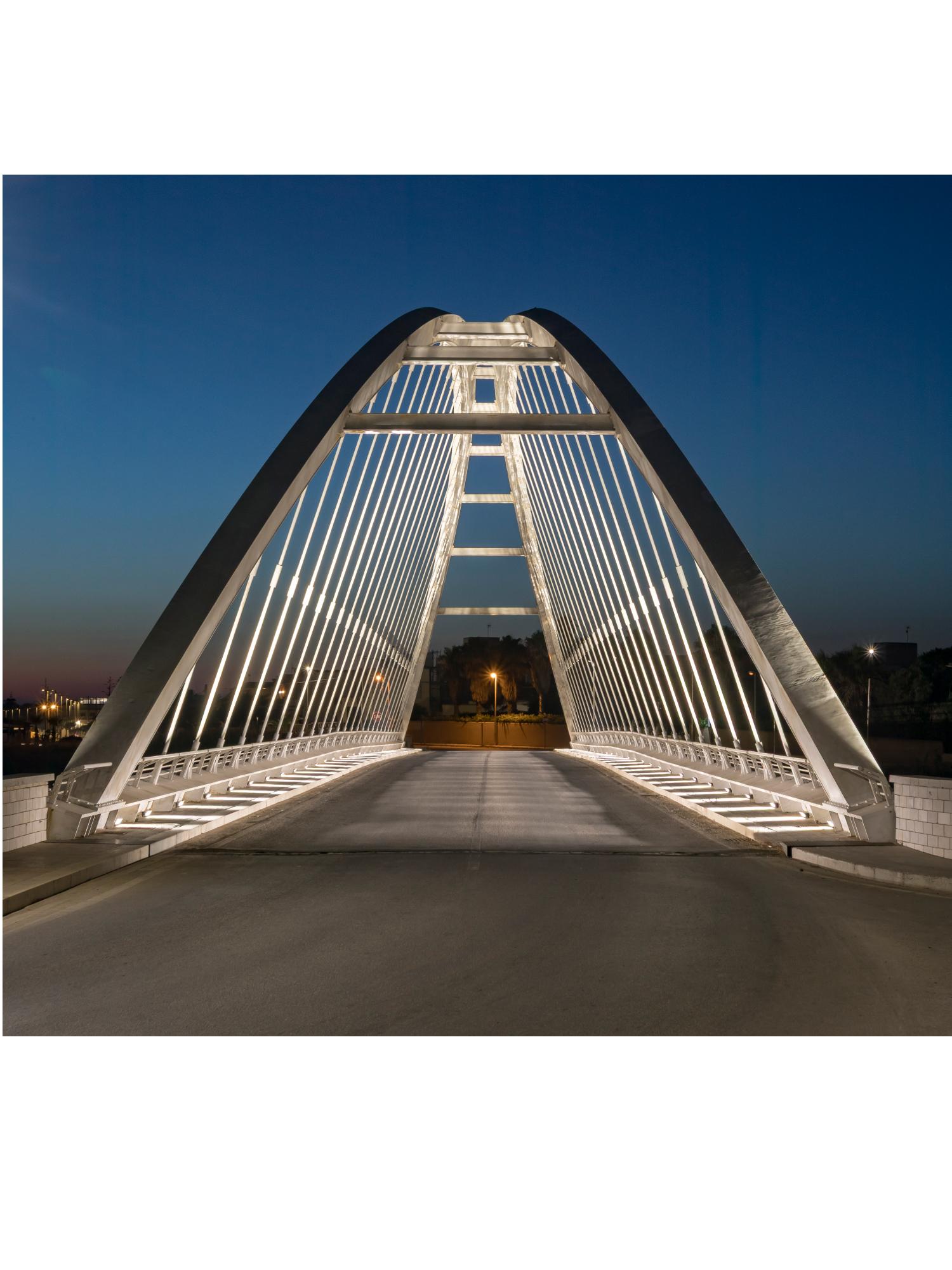
Today, the bridge is once again fully accessible even at night, thanks to a new lighting design that combines efficiency, reliability and architectural enhancement.

A strategic bridge that has remained in the shadows for far too long


When designing lighting for infrastructure, it is not simply a matter of illuminating a path.

Lighting helps to improve safety, makes it easier to find one’s way around, enhances the sense of comfort and restores value to public spaces.

In the case of the Arena Bridge, the new lighting system marks the completion of a wider regeneration project promoted by the Free Municipal Consortium of Trapani, restoring to the public an infrastructure that is finally recognisable and safe, even at night.

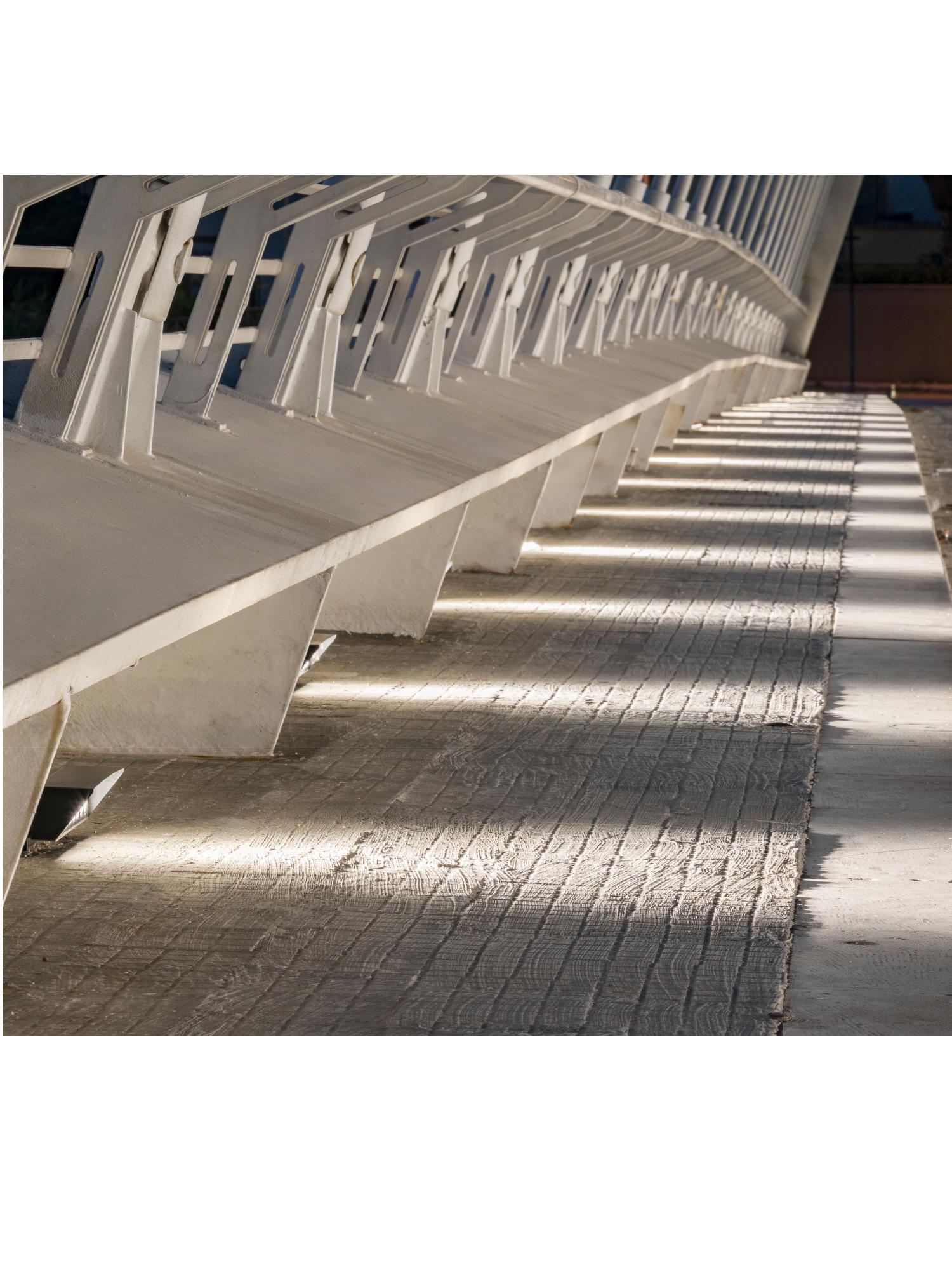
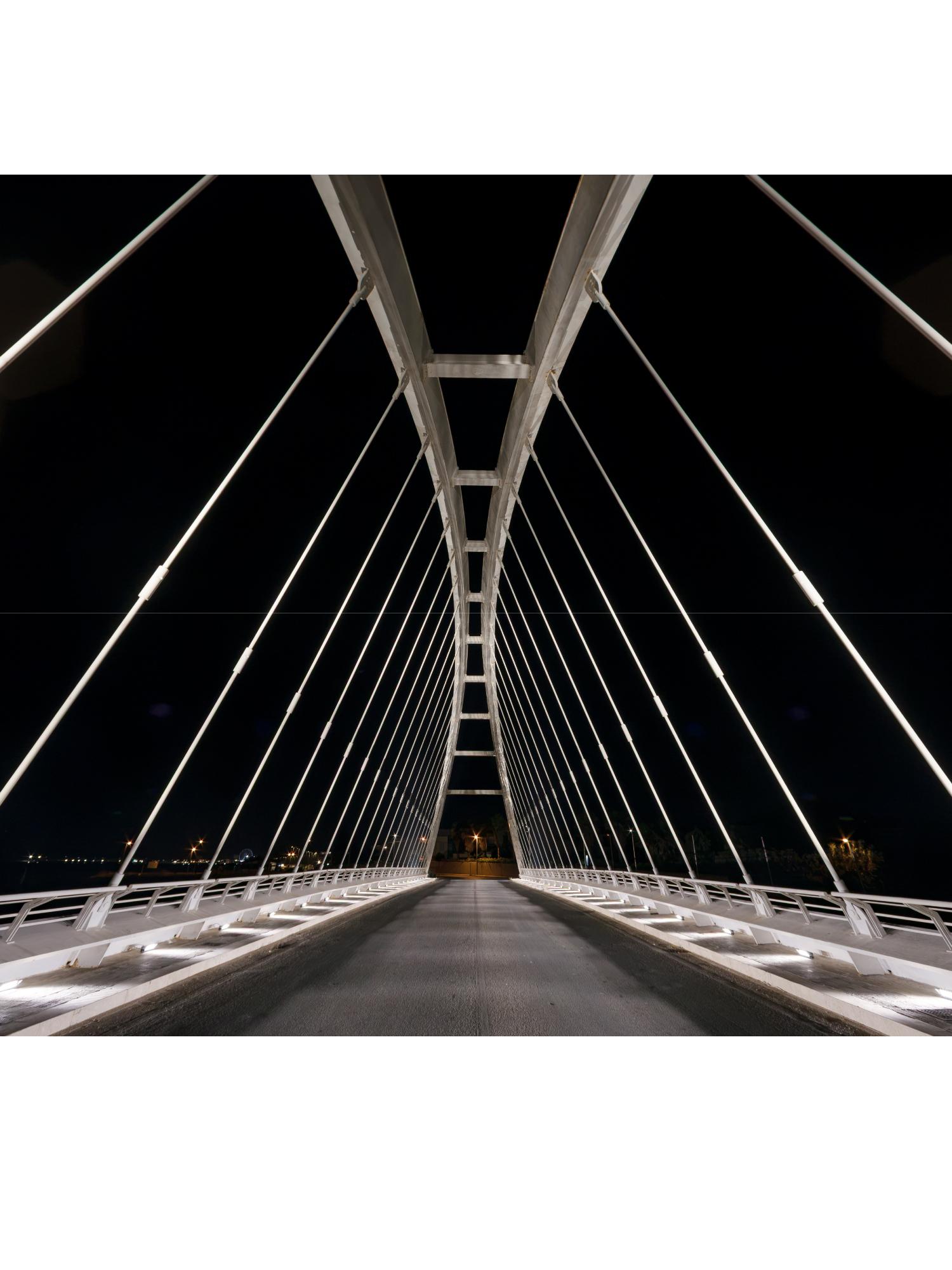
The project illuminates the bridge with an even distribution of light, improving its visibility and highlighting its architectural lines without causing unnecessary light spill.

The aim was not merely to ensure adequate lighting levels, but to transform a functional element of the city into a new landmark, even in the evening hours.

Light thus becomes a tool for urban regeneration: it makes the bridge recognisable once again, improves the quality of the public space and contributes to the perception of a more well-maintained and welcoming environment.

I have no idea what this is

When the project imposes new constraints 


Every lighting design project arises from the interplay between functional requirements, structural constraints and the pursuit of the best possible light quality.

In the case of the Ponte Arena, the design team was commissioned by the Libero Consorzio Comunale di Trapani when maintenance work on the infrastructure was already at an advanced stage. The aim was to identify a lighting solution capable of completing the bridge’s regeneration, whilst adhering to specific design conditions.

One of the main constraints concerned the installation system. In the past, the luminaires fixed to the metal arches had suffered significant corrosion due to the combined effect of salt spray and galvanic currents. For this reason, the client stipulated that the new system should be installed exclusively on the concrete structures, avoiding any connection with the metal parts of the bridge.

This decision ruled out traditional solutions from the outset, such as the use of tall masts at either end of the bridge, both for aesthetic reasons and to ensure the best possible visual comfort for motorists.

This led to a detailed lighting analysis, aimed at identifying a compact, unobtrusive solution capable of blending seamlessly into the bridge’s architecture.

I have no idea what this is

BAJA: when stainless steel meets design


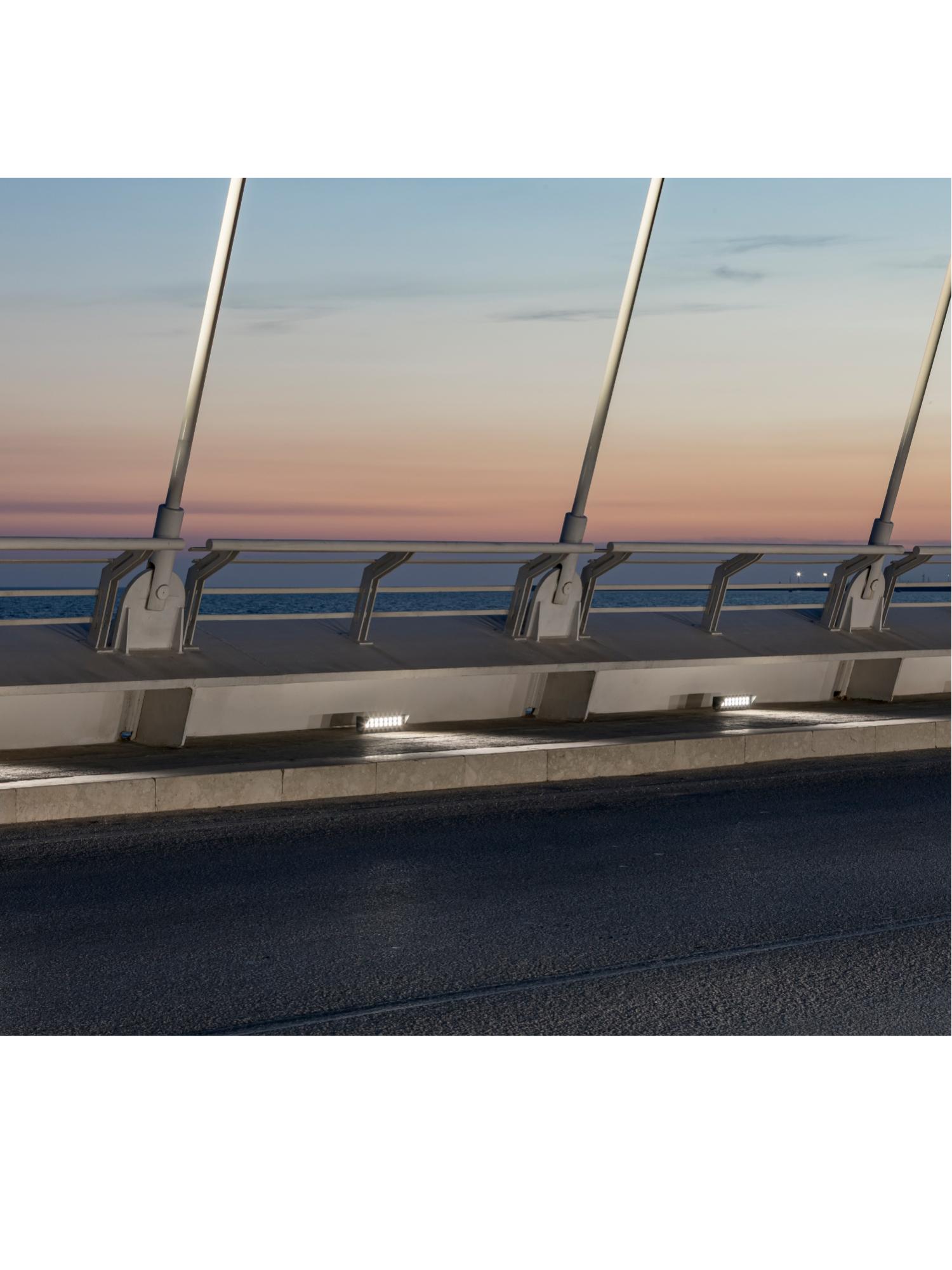
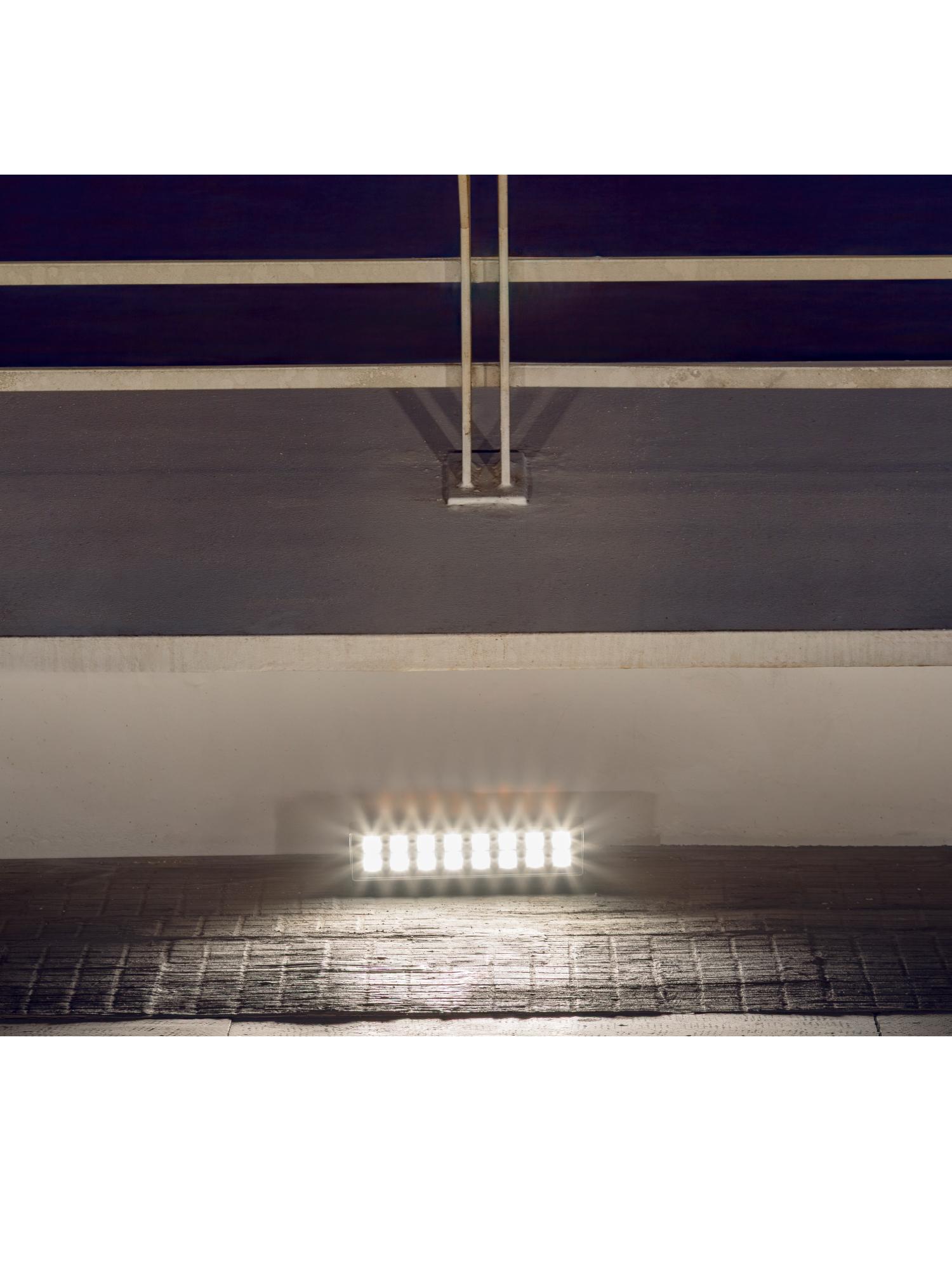
The solution devised involved installing the luminaires in the space between the bridge’s concrete structure and the metal guardrail, powering them directly from the ground via the mounting bracket, without affecting the metalwork in any way.

An installation that appeared simple but was made complex by the need to combine compact dimensions, high lighting performance and maximum reliability in an environment heavily exposed to salt spray.

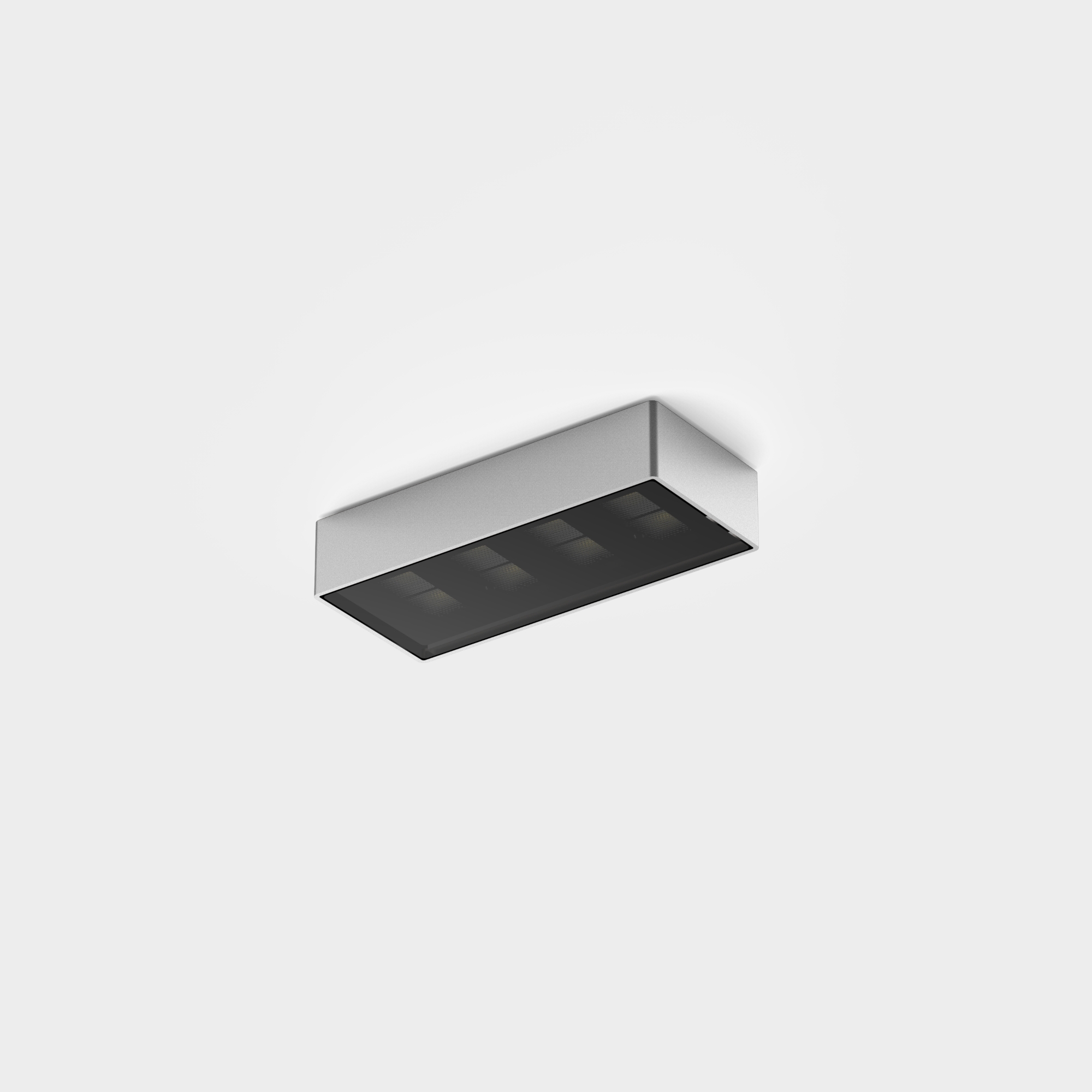
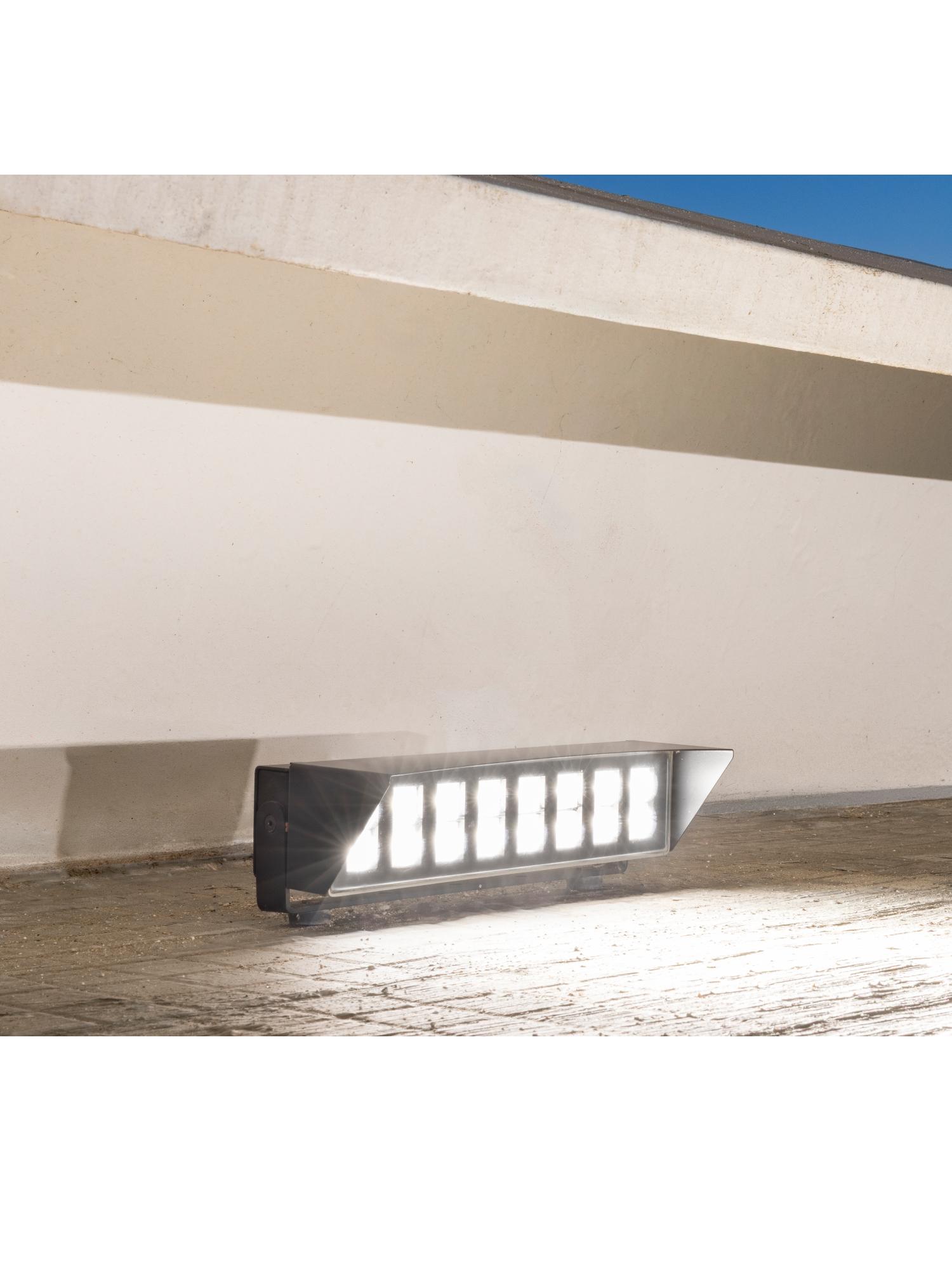
In a coastal setting such as Mazara del Vallo, the choice of material is, in fact, of crucial importance. For this reason, the project identified STRAL’s BAJA floodlights as the ideal solution: the luminaire is made from AISI 316L stainless steel (Marine Grade Stainless Steel), a material recognised for its high resistance to corrosion and its ability to maintain its mechanical and aesthetic characteristics over time, even in the most severe environmental conditions.

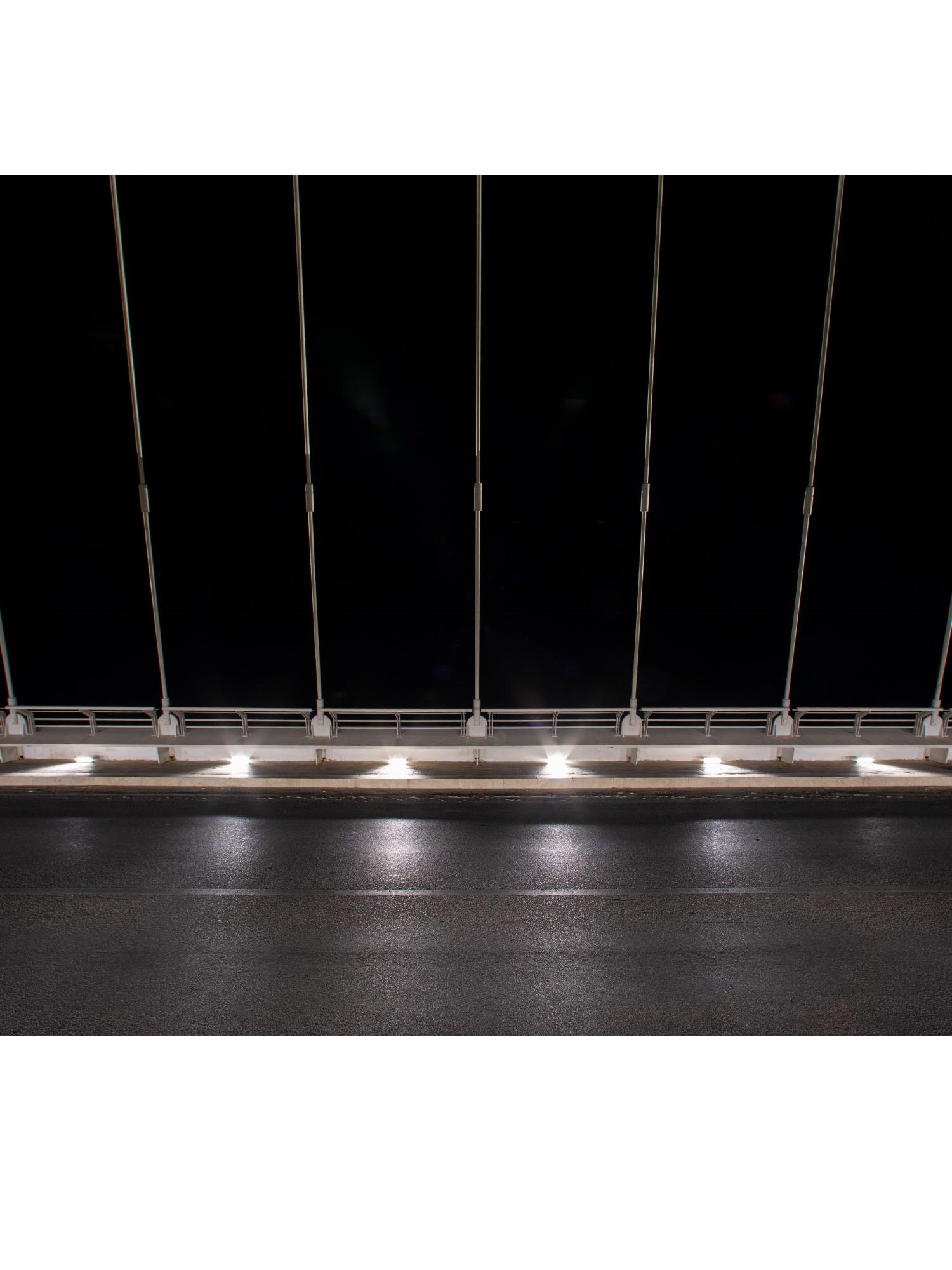
In addition to the qualities of the material, the product also offers specific lighting characteristics. Thanks to its elliptical photometry, BAJA has been installed to provide grazing light across the carriageway, distributing the luminous flux evenly without the need for tall poles and preserving the clean architectural lines of the infrastructure.

The compact design of the luminaire, the option of power supply via the bracket and the durability of the stainless steel have made it possible to meet all the project’s requirements simultaneously.

I have no idea what this is

From simulation to result


To validate the design solution, a detailed lighting simulation was developed using a three-dimensional reconstruction of the entire bridge.

This study made it possible to verify the light distribution in advance, optimise the positioning of the luminaires and confirm that the required lighting levels had been achieved.

The result achieved on site faithfully reflected the simulations: uniform lighting of the carriageway, high visual comfort and a new architectural enhancement of the bridge, which now serves as a recognisable landmark for the city, even at night

I have no idea what this is

Light enhances without glaring


One of the most sensitive aspects of the project concerned the visual comfort of motorists.

As the luminaires are installed at a height close to the drivers’ line of sight, a special shielding visor was developed to limit upward light emission and eliminate any possible glare caused by opposing light beams.

The project is complemented by the lighting of the bridge’s metal arches and stay cables, achieved using floodlights with extremely narrow 4° beam angles, installed on the four supporting piers and positioned below road level.

This solution enhances the architectural structure without obstructing users’ view, creating a subtle yet highly distinctive visual effect.

I have no idea what this is

Energy efficiency and reduced maintenance


The LED technology used in the project delivers high levels of energy efficiency compared with traditional systems.

Greater luminous efficacy means lower electricity consumption and a significant reduction in maintenance requirements, thanks to the long service life of the light sources.

For public authorities, this translates into a twofold benefit: reduced running costs and consistent performance over time.

When the efficiency of LED technology is combined with the durability of AISI 316L stainless steel, the result is a system designed to maintain its performance even after many years of operation, even in particularly harsh environments such as marine settings.


Light that highlights the landscape


L'intervento sul Ponte Arena dimostra come l'illuminazione possa andare ben oltre la semplice funzione tecnica.

Ogni scelta progettuale, dalla posizione degli apparecchi alla distribuzione della luce, alla selezione dei materiali fino al controllo dell'abbagliamento, contribuisce a migliorare la sicurezza, valorizzare l'architettura e restituire qualità allo spazio pubblico.

È questa la filosofia che guida STRAL: progettare sistemi di illuminazione outdoor capaci di coniugare durabilità, sostenibilità, precisione illuminotecnica e qualità della luce, scegliendo materiali che resistono al tempo e alle condizioni ambientali più impegnative.

The project on the Arena Bridge demonstrates how lighting can go far beyond its mere technical function.

Every design decision, from the positioning of the luminaires and the distribution of light, to the selection of materials and the glare control, helps to improve safety, enhance the architecture and restore quality to the public space.

This is the philosophy that guides STRAL: to design outdoor lighting systems that combine durability, sustainability, lighting precision and light quality, choosing materials that withstand the test of time and the most demanding environmental conditions.
I have no idea what this is